

Wakefield Rhubarb Festival
Wakefield’s renowned Rhubarb Festival returns once more for 2023. Wakefield council, with their customary brio, celebrate Yorkshire’s most famous vegetable with an enthusiastic audience.
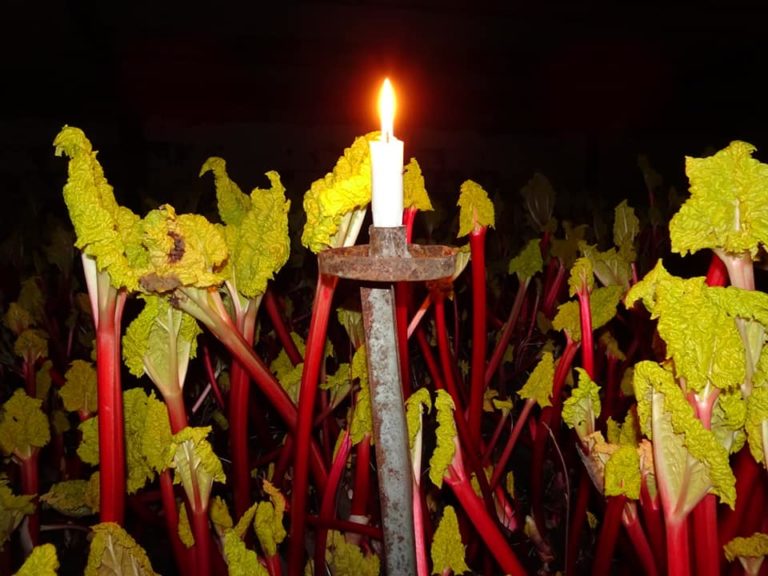
Wakefield is slap bang in the middle of the rhubarb triangle which once covered an area between Wakefield, Bradford and Leeds. It is still home to some of the very best forced rhubarb farms including Oldroyd’s, where we visited the rhubarb sheds last time we were here. If you listen very carefully, you can hear the rhubarb squeaking as it grows by candlelight.
The Rhubarb market
The food and drink market in the town centre, is buzzing when we get there. Almost everything has a rhubarb element to it. Rhubarb liquor, rhubarb pies, rhubarb crumble, rhubarb fudge and cakes.There is even a special Rhubarb curry mix as favoured by the festivals mascot Ruby Rhubarb!

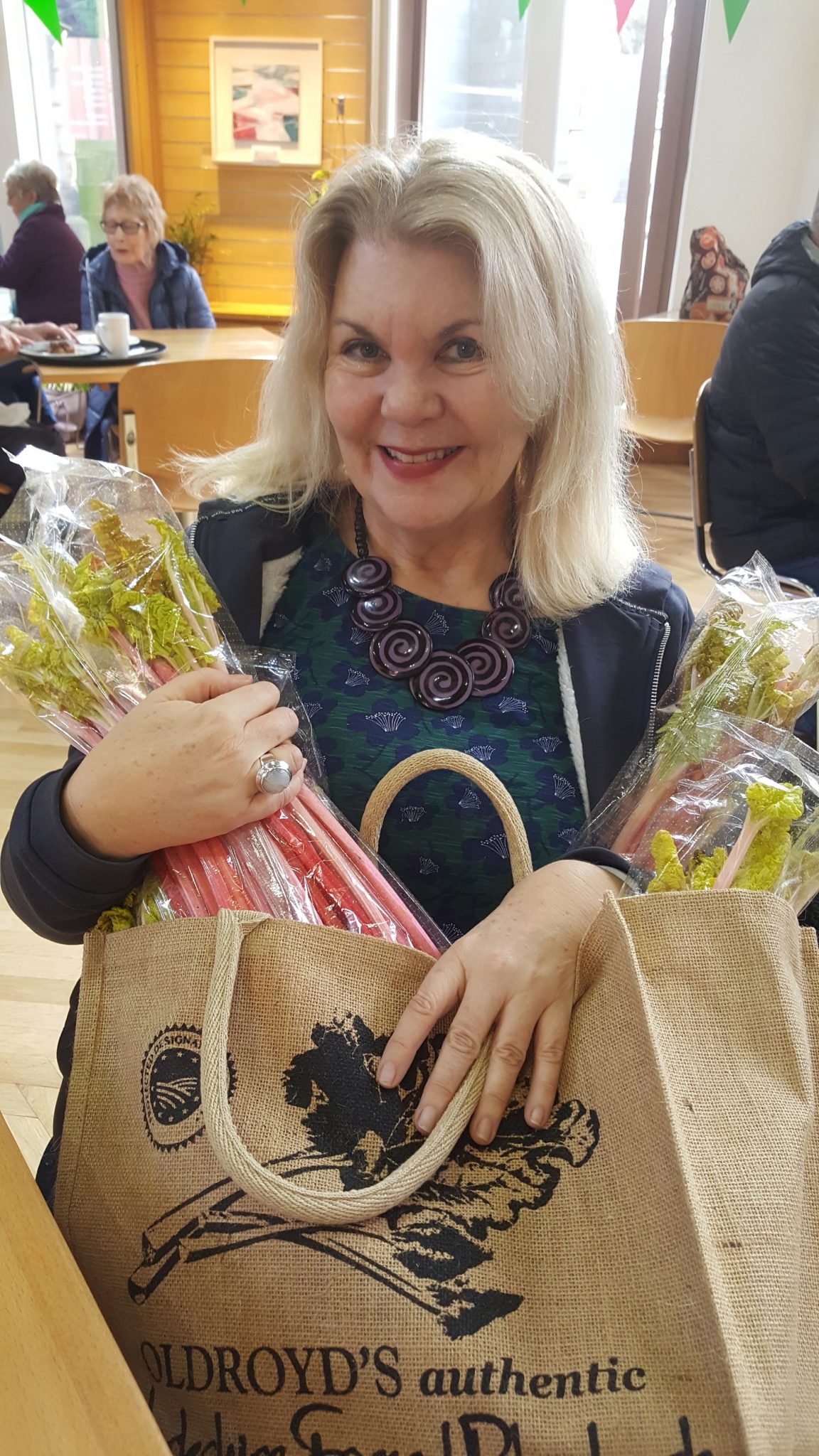
Of course the real thing is also on sale, and I do buy a rather large amount of it. It’s easy to cook and easy to freeze for those dark days when there isn’t any fresh rhubarb to be had.
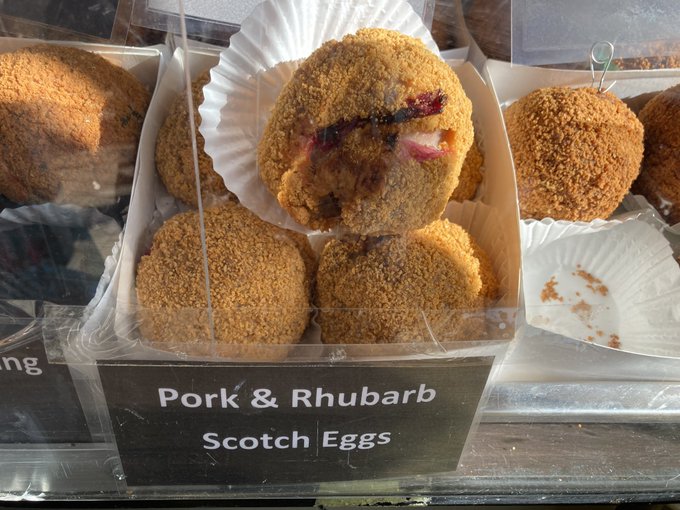
There has been a run on rhubarb scones which have sold out, but there is still rhubarb cheese, rhubarb sausage rolls and even rhubarb scotch eggs to be had!
We meet the folks from Rhubarb Radio and stop to say hello to local gin company Forged who are hosting our evening’s entertainment.
The Rhubarb cocktail competition
Later that evening we attend a rhubarb cocktail competition where local bar owners compete to make the best rhubarb related cocktail. We try the ‘Rhubarbara Hepworth’, named after Wakefield’s famous artist and sculptor. Next is the ‘Love Triangle’ which feature a very large ice cube and some Gypsophilia in the glass. The ‘Forged in Wakefield’ was made using black cherry gin (wasn’t sure about that one) Our favourite was the Rhubarb and custard which tasted absolutely amazing!

The hosts were Rhubarb Radio and we were also served some delicious food from Cubana bar. A thoroughly enjoyable evening!

Wakefield Rhubarb – it’s place in history
Rhubarb is native to Siberia and thrives in the wet cold winters in Yorkshire. West Yorkshire once produced 90% of the world’s winter forced rhubarb from the forcing sheds that were common across the fields there
Growing and forcing rhubarb was originally done by many hundreds of small farmers, smallholders and market gardeners. In later years some growers expanded and owned many thousands of roots and extensive forcing sheds. In the late 19th century early forced rhubarb was sent to Spitalfields and Covent Garden markets in London in time for Christmas and was sent to Paris for the French market. A special express train carrying rhubarb was run by the Great Northern Railway Company from Ardsley station every weekday night during the forced rhubarb season from Christmas until Easter. It was known as the ‘Rhubarb Special!’ Rhubarb became less popular after the Second World War when more exotic fruits became more available.

Medicinal Rhubarb
Rhubarb has many medicinal properties. The medicinal type is full of potassium and has antibacterial properties. It was used for people with stomach, liver and lung problems. It was also given as a cure for constipation and administered to tuberculosis sufferers.
Packed with Polyphenols, which kill free radicals in the body rhubarb can help to prevent the development of cancerous cells. It can also thin the blood preventing the development of blood clots. Used by man since 2000 years before the birth of Christ, Rhubarb is the ultimate in organic artisan food production. A special plant with a fascinating story to tell.
It’s always a lark at the Wakefield Rhubarb festival – the first festival on the council’s calendar. It’s fun friendly and a lot of effort has gone into the details of the day. Don’t miss it next year!
Read about our visit to the Rhubarb sheds here.