

Native Animal Rescue – Day one
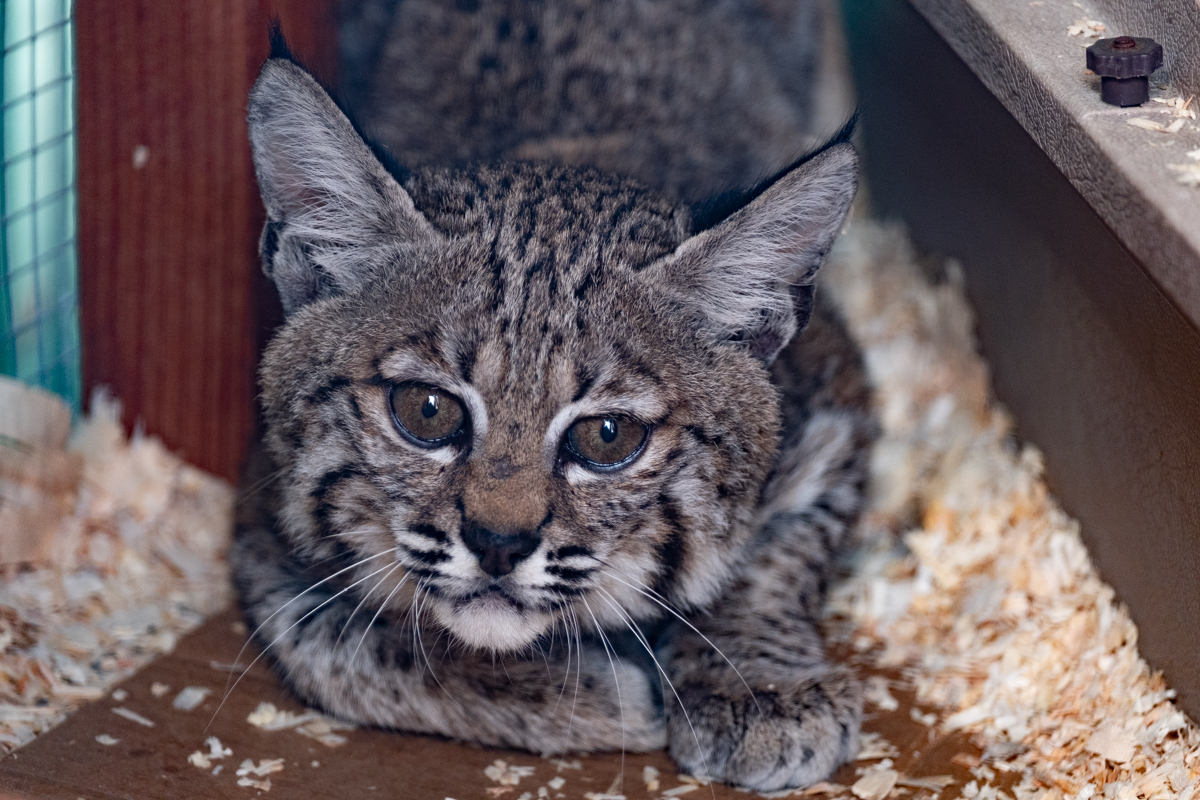
Volunteering at native Animal Rescue was a particular dream of mine. This season Native Animal Release release one bobcat, two fawns, and eight ground squirrels just to give an idea of the many releases that NAR works toward for all of the wildlife
that arrive at our door. I arrive for my volunteer induction after driving myself from Fremantle to Malaga a way out of the city, on some empty Australian roads. Working with Australian animals is something I have always wanted to do and I’m quite excited. I receive my induction chat along with the other new volunteers at the Fauna Rescue centre in Malaga (pronounced Ma –LA -ga) Western Australia, just North of Perth.

Snake warning
Tour of Native animal Rescue
I enjoy a tour of the animals in for rehab. I meet and greet a range of birds, reptile and marsupials, Next I am on food prep duty. For each animal there is a menu on the wall. A square indicates the size of the chunks of food each species can eat.
You then need to locate the meal components for each species. This could be anything from beetroot to peppermint branches. You chop it to the required dimensions and then fill a bowl for the corresponding animal.
Luckily, chopping up fruit and veg with a blunt knife is something I’ve been doing for years at home. I was certain that I must excel at this task.

Peppi the possum
In the afternoon, I do a bit of computer support and help edit some of Native Animal Rescue’s educational leaflets. I feel my standing is improving and I cuddle a brush tailed Possum called Peppi as a reward. He was unfazed by the attention as he peeped out from his pillow case. Most of the animals here are wild and will hopefully be re -released, so only a few can actually be handled at all. A bit of a blow for a keen volunteer.
 Two admissions this afternoon. A Bobtail arrives, a kind of fat tailed Iguana. Some kid’s dog found it in the yard.
Rogue volunteer
One of the young volunteers, Daniel, had gone awol without permission which is not allowed in the reserve. It turned out he’d gone home in a huff because someone had advised him how to improve his sweeping up technique. You have to be careful how you give domestic guidance to the male of the species.
Day 2 at Native Animal Rescue
First task of the day, fix the Bandicoot’s breakfast. The Bandicoot is a long tailed pointy nosed marsupial. It small and very cute. Sometimes people mistake it for a giant rat. This does happens in reverse on occasion and giant rats can be mistaken for Bandicoots. This happens with a receptionist at a local business who calls the rescue centre for Bandicoot retrieval services. Animal recue arrives and find her petting a large rat and feeding it her lunch in the office. It’s Aboriginal name is a Quenda. It is very fast on its feet and is partial to a cube or two of cheese.

Feeding the babies
Next we fed the baby honeyeaters ( a sort of humming bird)and the Wattle bird with delicious insectivore mince. Mixing this mince is a daily activity. You must wear surgical gloves while doing this. It is then fed to the baby birds with plastic tweezers. It does not smell the best.
Catching Cockatoos
The highlight of the day today was catching the endangered Black Cockatoos from the large aviary. They were due for release back into their flocks. Matching each bird’s DNA to existing wild flocks means that they can return to exactly the right place.
They are big handsome birds, the males have pink eye rings and big black plumes on their heads. We had to try and catch them with a giant net. A sort of Tom and Jerry chase sequence ensued. The Cockatoo expert guy ( a sort of Cockatoo version of Crocodile Dundee) was pretty impressive with the parrot net. His comprehensive knowledge of these rare birds was considerable. Nesting sites, mainly on large ancient trees are rapidly being destroyed. I cuddled Peppi the Possum some more in the absence of anything else available that wouldn’t bite me.

The very tolerant Peppi the brushtail Possum
Home from NAR
I drove home from my day’s work, happily listening to the Ozzie radio stations. They tend to favour mainly eighties soft rock tunes with titles such as “I’m TNT I’m Dynamite,” and ‘I love Women in uniform.” I’ve never heard so many eighties hits that were never hits here. R&B has not conquered the West Coast airwaves round here yet.
Next day at Native Animal Rescue
 |
| Frankie the possum makes his escape bid |
I arrive to find that a poorly Pelican has pulled through. This is good as he is a beautiful specimen. Apparently he was found in a bad way at Ascot. Not, presumably wearing an unfeasible hat and putting bets on.
There are lots of places in Australia called after places in England. Practically all of the North East is represented in New South Wales when miners from this area emigrated to work in the gold mines in the 1800s. Newcastle, Stockton, Wallsend, Killingworth even Jesmond and Gosforth have been reincarnated. In Western Australia, it seems a more Southern contingent also came down under. I noted Guildford, Highbury, Caversham and of course Ascot.
NAR involves the community
Native Animal Rescue – Feeding the Possums