


A short break in Budapest
The history of Budapest flows beneath its streets carried by more than a hundred natural hot springs criss-crossing the city. I travelled to the twin cities of Buda and Pest and arrive on a balmy autumn evening. The Danube is illuminated by her iconic bridges and the domes of Buda rise like ghosts from another century. Somewhere in the city, the water is waiting — ancient, mineral, healing. The Hungarians have been bathing here since the Romans first laid down their mosaics. I had come, as they once did, to be restored.
The City Beneath the Steam
They call Budapest the City of Spas, and this is no understatement. Beneath the pavements, hot springs run through limestone caverns, carrying beneficial minerals to the surface. The Romans built their thermae here; the Ottomans crowned them with domes. Even today, water defines the city as surely as the Danube that divides it.
Széchenyi Spa

Tourists and locals throng to the very popular Széchenyi Spa. Designed by architect Győző Czigler and built between 1909 and 1913, the style is characterised by its ornate domes, grand arches, and historical elegance. The Neo Baroque façade, yellow as butter cream, glows in the afternoon light.
Inside, the air is thick with warmth and subdued chatter. People play chess in steaming pools and throngs of patrons bob about in the warm outdoor pool like dumplings in broth. Conversations in multiple languages drift by in the dying hours of the day.

There are many pools here, some are for medicinal purposes and are only available on prescription. Others, tumbling through the vast building are of varying temperatures. The warmer the water, the more populated the pool seems to be. In the background a red and white striped helium balloon rises and falls like a scene from Around the World in Eighty Days. The original army green changing rooms are a piece of iconic design history by themselves.
A new beer bathing facility is proving popular with punters. You’ll soak in a warm, private tub filled with thermal water mixed with ingredients like hops, malt, and yeast There is a beer tap in between two wooden tubs where you can satisfy your thirst while brewing your body back to wellness.
There are nine major spas you can visit here in landlocked Hungary. Each spa bath has its own character. The Gellért, with its Art Nouveau mosaics, is the most graceful. Rudas is an indoor only spa, hidden beneath a sixteenth-century dome. Lukács, quieter and less visited, is frequented by artists and poets. To bathe in Budapest is to journey through time, from empire to revolution to rebirth.
The Hungarian State Opera House
The Hungarian Opera House is an extraordinarily grand building. Gold leaf, royal red and ornate opulence overload the senses. Inside the Opera, restored to its nineteenth-century splendour, velvet upholstery glows a deep carmine under the stunning chandeliers. Not so large as the Opera House in Vienna, it exceeds that building in its extravagant beauty. Even before a note is sung; the architecture awes. An aria begins and the thrill of the soaring soprano quickens the heart.

Cafe Parisi Budapest
A few streets away, is the iconic Café Parisi, a very famous refreshment venue. This iconic cafe is housed beneath a magnificent crystal glass domed ceiling. Once a social stop for aristocrats and financiers, it now welcomes travellers in search of elegance and of course, cake. Waiters glide among the parlour palms, delivering trays of impossible pastries, glistening with sugar. We order coffee and I select a chocolate Rocher bombe. In Budapest, you don’t need an excuse – even indulgence feels therapeutic.

Buda Castle
Crossing the Chain Bridge, we join the flow from Pest to Buda. The bridge itself, a nineteenth-century marvel of iron and stone, was the first to unite the two halves of the city. Below it, the Danube flows on. Above, the Buda Castle looms, part ruin, part astonishing resurrection project.
The castle is being rebuilt to its pre communist glory. Not modernised, but restored, stone by stone, to its imperial form. It is an act of hope on a monumental scale.
From the ramparts, I look down over the river. Twelve bridges stitch the two sides together. Beyond them, the Parliament Building rises in Gothic perfection. A country once twice its size, fractured by history, now fixes its gaze firmly on the future.
The Green Heart of the City
Beyond the main centre is City Park (Városliget), once a royal hunting ground and now Budapest’s living heart. Here, the air smells of grass and roasted chestnuts. A haven for families and dog walkers.
At the park’s edge stands the Museum of Ethnography, a great glass wing of a building whose grassy roof slopes blend into the landscape. We climb the path up the steep incline to the top of the building to appreciate the view across city park. The swooping architecture attracts avid skate boarders, causing civic disapproval. The museum’s design, chosen from an international competition, is half architecture, half landscape. This is Budapest 2025.
Also inside the park is House of Music, Hungary, a place where sound itself becomes a form of therapy. Designed by the Japanese architect Sou Fujimoto, it presents as a half-organic, half-celestial structure.
The roof is a great golden canopy perforated with hundreds of circular openings. Light falls in as if through the leaves of a forest. The concert hall walls are almost entirely glass, blurring the line between park and performance. Visitors can experience the landscape while listening to music.
In the Sound Dome, you lie on a circular bean bag beneath a swirling cosmos of images and sound. A thousand channels of music — whispers, melodies, waves of sound cascade through 360 degrees.

Elsewhere, interactive exhibits invite you to touch the history of sound: to feel the vibration of a drum through your fingertips, to layer melodies using projected instruments, to stand at the centre of a virtual choir and conduct with the flick of a wrist.
Each year, the House of Music hosts more than 500 concerts, from classical to jazz, world, and experimental performances. In summer, open-air stages extend into the park.
The National Dance Theatre.
Located in the vibrant Millenáris Park, the National Dance Theatre is the home of Hungarian dance, where everything from traditional folk to contemporary genres finds its place. The strikingly modern building was purposefully designed for dance performances and is equipped with state-of-the-art theatre technology.
The theatre collaborates with nearly 40 Hungarian dance companies, making it a central hub of the country’s dance scene. We see a thought provoking performance of ‘Circulation’ by Hungarian choreographer Yvette Bozsik.
Kolodko’s sculpture trail
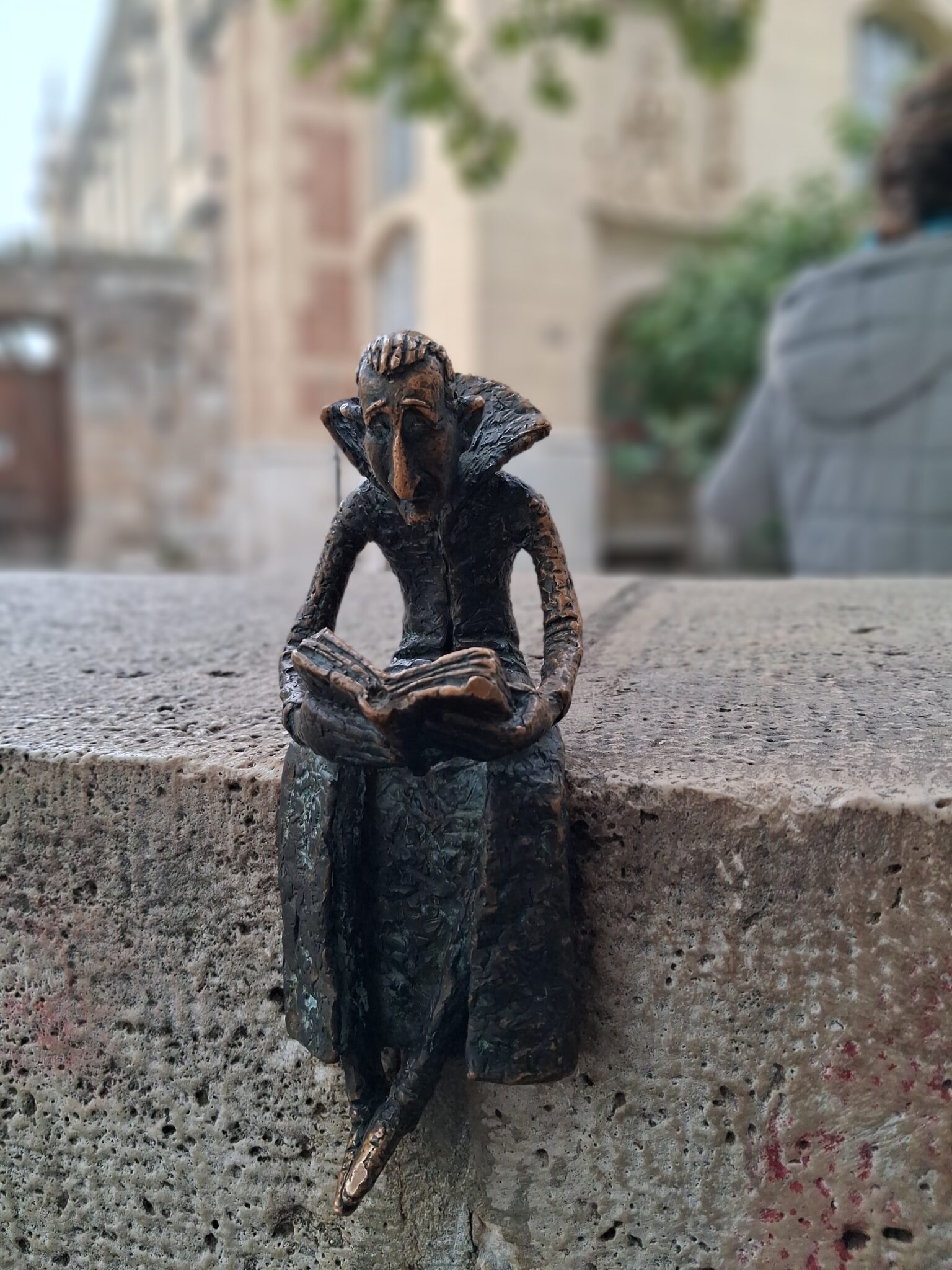
Wandering through Budapest, if you pay close attention, you may notice the regular appearance of some tiny bronze figures. A mouse peering from a drainpipe, a miniature Houdini (a native of Budapest) escaping from a padlock, a tiny teddy bear, or a diminutive Dracula sitting reading a book. These are the secret works of Mihály Kolodko, whose tiny statues have turned Budapest into a treasure hunt. They reward the observant and show a wry Hungarian humour.
Taste of Budapest
There is a growing culinary scene here too. At Tati, a small farm to fork restaurant tucked behind the Opera, the Hungarian countryside distilled onto the plate. Try roasted beets sweet as honey or free-range duck resting on a bed of spiced pumpkin.

Time Out Budapest
Newly opened – the Time Out Food market on the floor of Corvin Palace has 11 kitchens, 3 bars and 5 event venues. You will be spoiled for choice. There is a vibrant celebration of food culture and community here and a unique taste of Hungary
Don’t forget to try a chimney cake, kürtőskalács, spiralled around wooden spits and caramelized over open flames. Often filled with ice cream they are not for the faint hearted or the calorie conscious.
