Marsupials meaning. A marsupial is a pouched mammal which gives birth to its young at a very immature stage. The baby then stays in the pouch to develop to maturity, sucking from its mother’s teats. There are about 250 species of marsupial, the largest and most well known being the kangoroo. Australia is home to most marsupial species with some exceptions like the O’Possum which found in the US. Marsupials include the Wallaby, the Koala, the bandicoot, the wombat, the Tasmanian devil and the eternally cheerful Quokka!
Marsupials meaning vs other mammals
In contrast, a placental is a mammal that completes embryo development inside the mother, and is nourished by the placenta. Marsupials tend to look like the furry mammals we know and love but they are totally unique. They tend to be smaller and as their brains develop differently and so they are often much quieter – they say a lot less! There are a few exceptions of course. The Tasmian Devil for example, is reknowned for the blood curdling screams which give it its name.
Chidlow Marsupial Hospital is a small charitable concern with a huge job to do. Australian native animals have got it tough. Land is cleared and fenced for farming. Human expansion in to the countryside, threatens their habitat. They also suffer frequently in car accidents. Marsupial babies are often found at a very young stage inside their dead mother’s pouch. With this comes an increased demand on wildlife rescue services to cope with displaced, injured or orphaned animals.
Chidlow Marsupial Hospital
A highlight towards the end of my second trip to Western Australia was my much anticipated visit to Chidlow Marsupial Hospital in the Perth Hills. Liz and Mark Appelt have been rescuing and rehabilitating Australia’s struggling marsupials for over twenty years and I first visited them ten years ago on my inaugural visit to Perth on a ‘Superoo’ tour.
Chidlow Marsupial Hospital
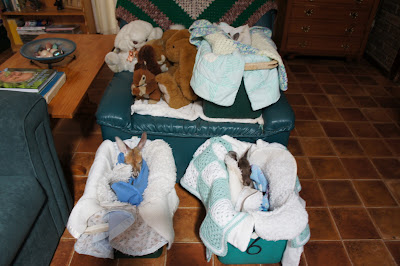
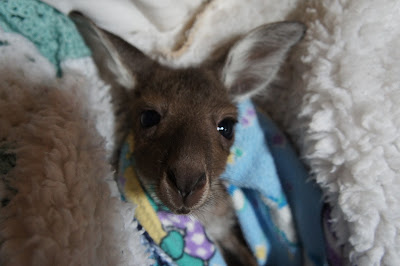
Chidlow WA is to be found up in the Perth Hills. Liz and Mark who live here and run the hospital are experienced rescuers. They have given over their home to these special animals in need. The nursery was my first port of call. Three joeys cuddle in their knitted pouches tucked up in their small roo beds – I travelled from the other side of the world anticipating a cuddle with one of these adorable babies.
Liz also has lots of other Roos, wallabies and a cute little Quokka rehabilitating in pens in the grounds and at large around the estate. Previous rescue Roos are still regular visitors to the house. Sugarplum and Sweetpea, two grey females return for a visit. The grown up kangaroos arrive with their latest offspring to say hello, although their babies aren’t tame like their hand reared mums.
The Roo nursery
Meet Brixley the wombat
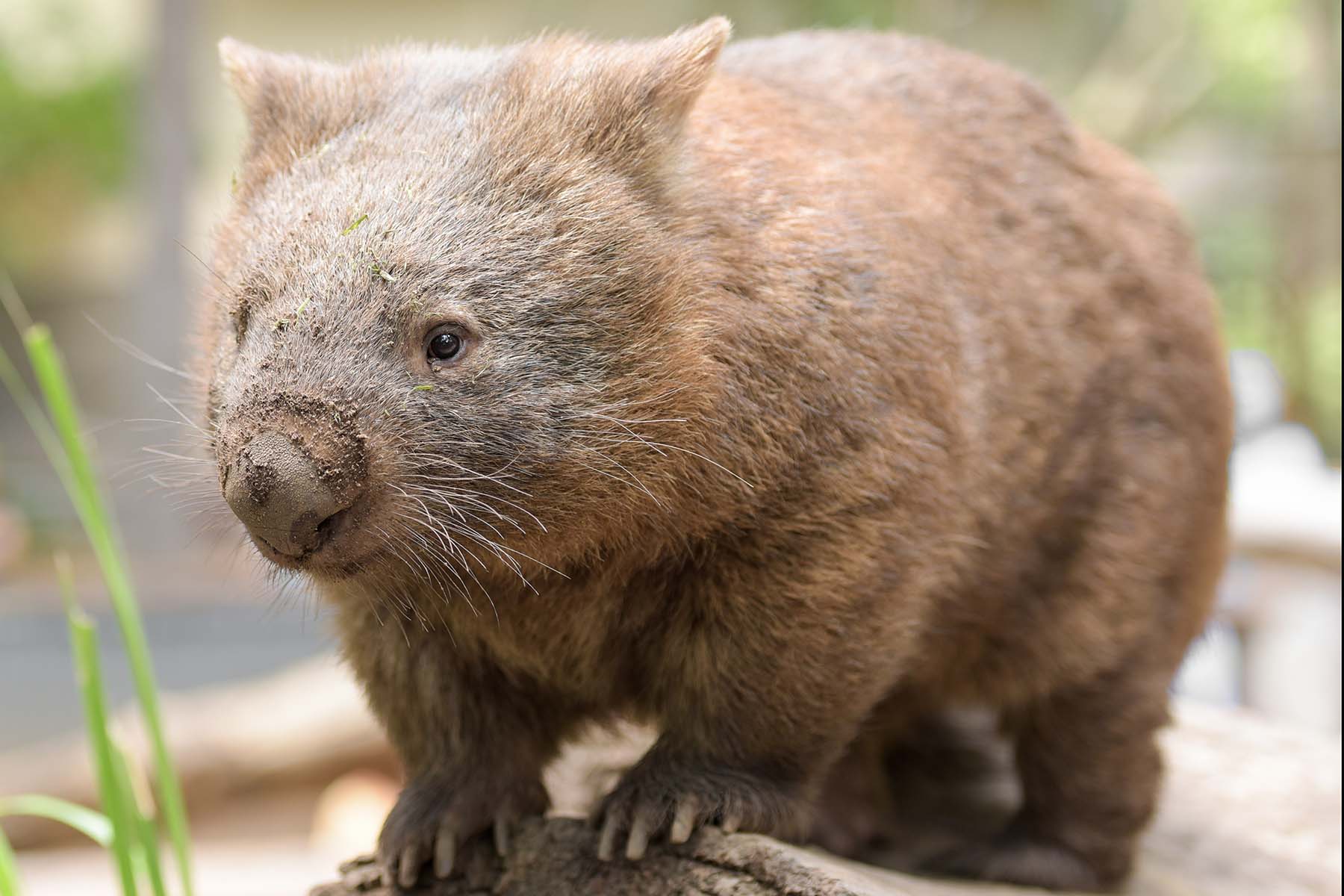
Next we meet a large, hairy nosed Wombat called Brixley. He has a wombat pouch and is a feisty marsupial who can grow to be quite substantial. Maybe the size of a small dog. This type of adorable Wombat has recently made it onto the endangered list. Mark, Liz’s husband takes Brixley out for a walk each day on a strong harness. The wombat grows into a robust and strong animal. Consequently it’s really more Brixley taking Mark for a walk than the other way around. To change direction on your walk with a wombat, you must pick the wombat up and turn it round manually.
Brixley the wombat
Snorkel the Echidna
Echidnas, from the family Tachyglossidae, are quill-covered monotremes. Sometimes people refer to them as spiny anteaters. The echidnas and the platypus are the only living mammals that lay eggs and the only surviving members of the order Monotremata.
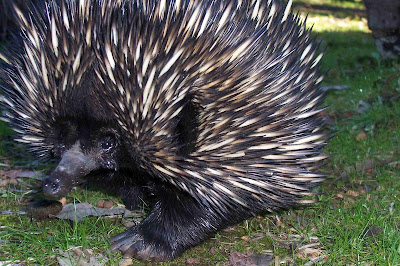
I am introduced to the gorgeous Echidna, Snorkel. Snorkel is a revelation. She is one of the most ancient species on the planet.
The Echidna looks like an exotic hedgehog and has a long velvety nose.
Liz describes Snorkel as a kind of half mammal, half reptile, production. The Echidna is also unusual because of a number of other reasons. It is a completely peaceful animal, which is rare in itself. On the critically endangered list, these are rare animals.
The peaceful Echidna
Echidnas sort out their differences without violence of any kind. Suitors of a female Echidna will queue for attention in an orderly fashion. The lady echidna makes her selection. We know little about what makes one echidna more desirable than another. Rejected males then walk away calmly, apparently without rancour.
Liz comments on the relative intelligence of the Australian fauna. She says that the roos are a bit like horses or deer – herd animals, sweet but flighty. Echidnas on the other hand, are surprisingly intelligent and adaptable animals. You can’t trap or tame an Echidna. It has the ability to bury itself to survive a bush fire. It is an excellent swimmer and can reduce its body temperature to 30 degrees if it needs to do so. They really are the brains of the operation! Awesome.
A face not easily resisted
Looking after orphaned and injured Australian wildlife requires a special type of veterinary care. Liz and her husband are one of the few that have the knowledge to save and rehabilitate these precious animals. Chidlow Marsupial Hospital is an exceptional place, run by exceptional wildlife carers. Finally, let us celebrate and support the sterling work of this unique and special place.