


Dubai Desert Adventure
What comes to mind when you think of Dubai? Shiny high rise hotels or perhaps extravagant shopping malls with giant aquariums? Maybe the tallest building in the world, the Burj Khalifa, or palm-shaped man made islands reclaimed from the sea. But there is another side to the story of Dubai. I travel to the Dubai Desert Conservation Reserve (DDCR) with Biosphere Expeditions to discover more about it.
The DDCR is committed to re-wilding a huge desert area. It represents 5% of Dubai’s land mass and covers over 225 square kilometres. The reserve safeguards the stunning desert landscape with its dramatic dunes, gravel plains and rocky areas and has a provided a vital habitat for Dubai’s native species, many of which have become extinct in the wild.

Biodiversity in the Dubai Desert Conservation Reserve
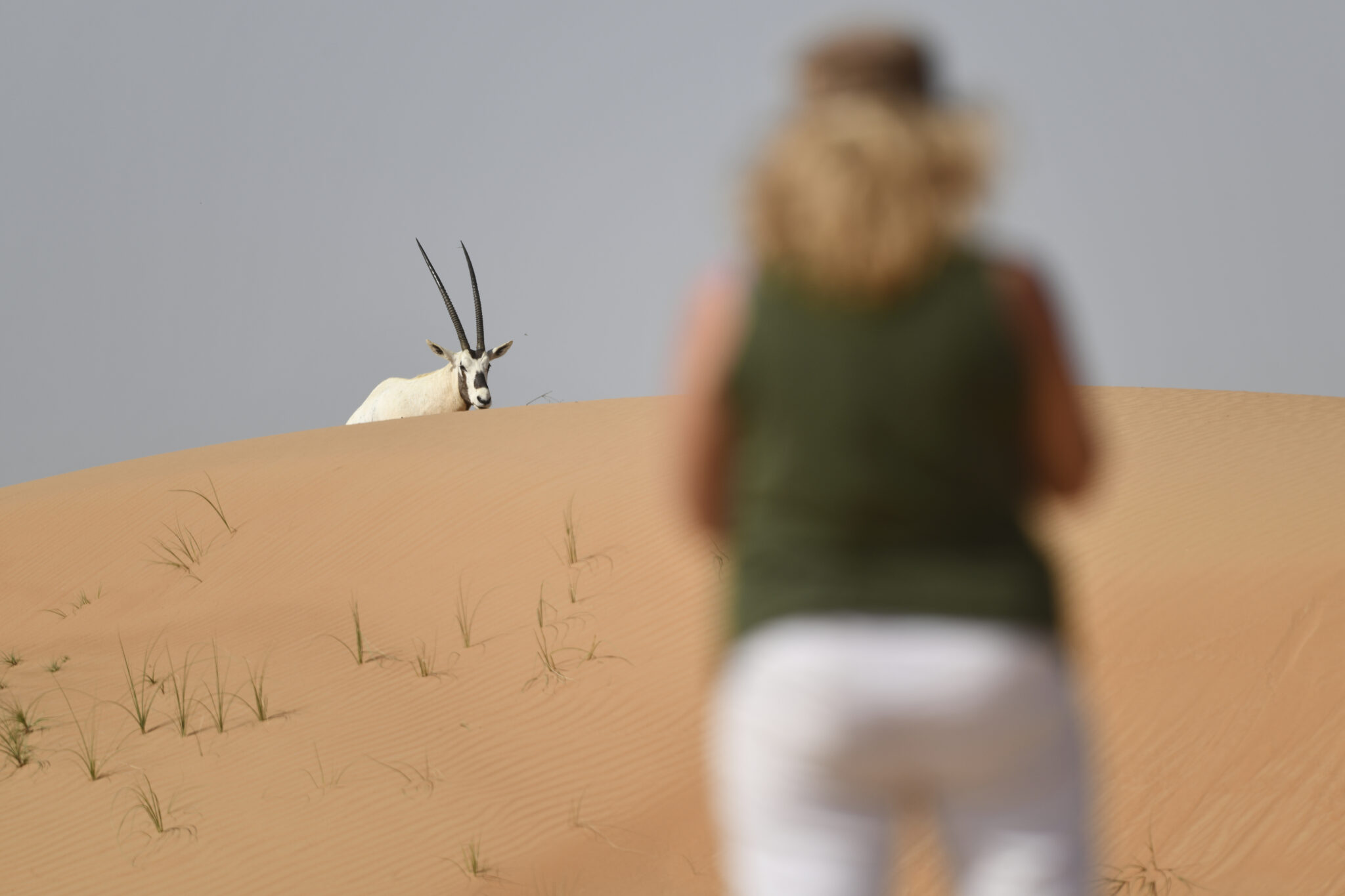
More than twenty years on from its creation by the ruler of Dubai – Sheik Mohammed bin Rashid Al Maktoum – the reserve is now home to hundreds of Oryx. This majestic beast is the national animal of the UAE. In fact this is now the largest free-roaming herd of Oryx in the Emirates.
In addition to these magnificent antelopes, there are about 300 elegant Arabian gazelles with their distinctice white striped faces. About a hundred Sand gazelles– which are smaller and more stocky than the Arabian gazelle – live here too. Other species include Arabian red foxes, hares, the Ethiopian hedgehog and some nocturnal rodents like Cheesman’s Gerbil. There are dozens of bird species here too, including the endangered Lappet-faced Vulture and the Pharaoh Eagle Owl. Lizards, snakes and scorpions also call the DDCR home.

The Dubai Desert Conservation Reserve Visitor Centre
On arrival we have a guided tour of the brand-new visitor centre which only opened in October 2023. The tour and exhibits are really well done and it is a great introduction to the reserve. From there we make our way to the conservation office to meet our scientists Maria and Basil. We learn about the equipment we will be using in the field. GPS trackers, compasses, datasheets and the all-important binoculars (best to bring your own.)
We are then introduced to our camp, a small tented settlement close to the boundary of the reserve. There are basic toilets and showers and a kitchen, but the emphasis here is on the animals and not the people. This is no luxury holiday, you are here to work as a citizen scientist!
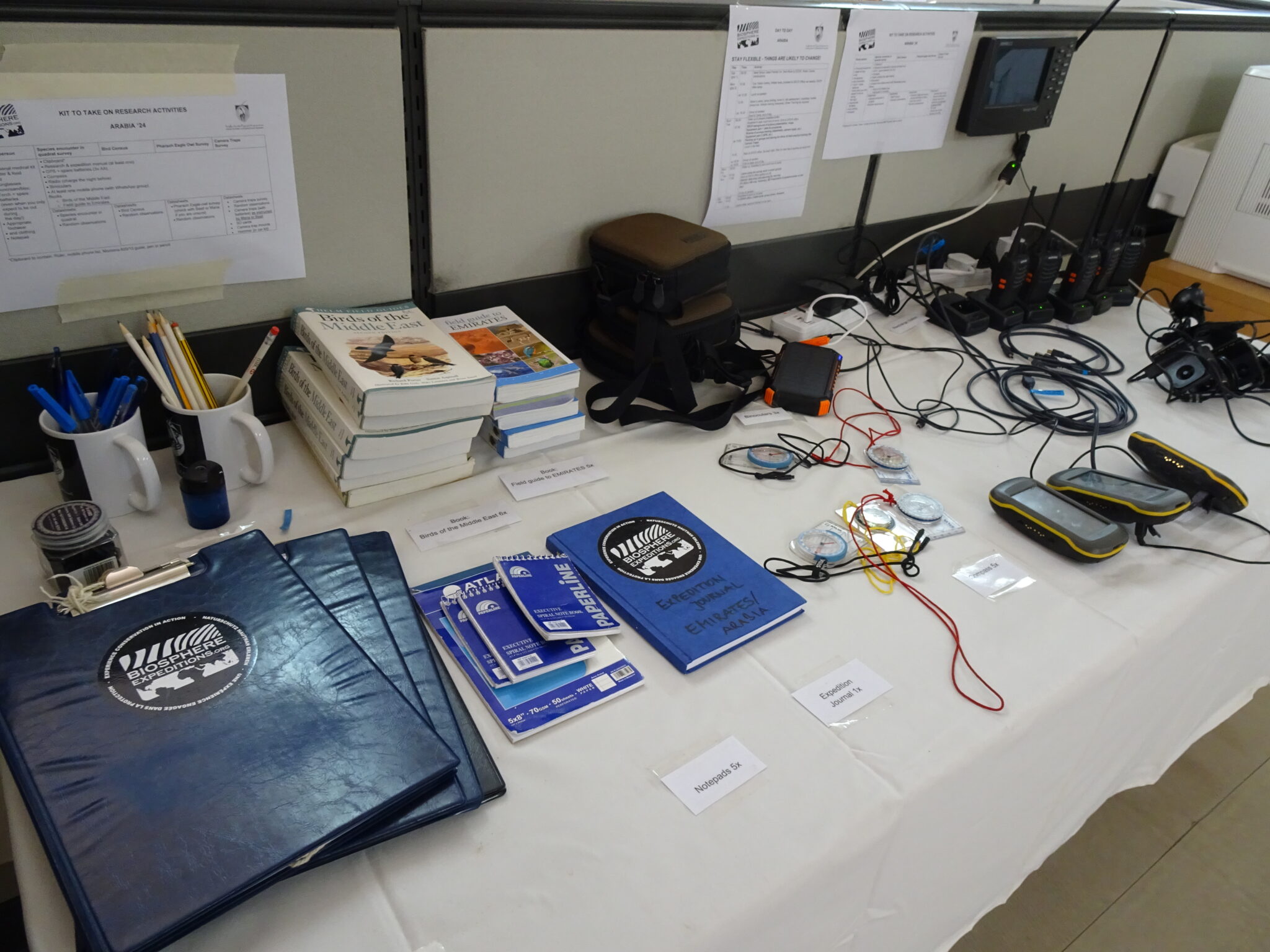
Being a Citizen Scientist with Biosphere Expeditions
The whole reserve divides into over 60 quadrats. Our task is to monitor the wildlife in some of those designated areas. We are briefed the night before about which quadrat our team are covering the following day. A ‘driving on sand roads’ test, has been completed by all of us, which is actually rather good fun. We deflate the tyres which provides better traction in off road driving conditions. Our team set out in a four-wheel drive vehicle with our surveying equipment. My packed lunch of peanut butter and banana sandwiches are at the ready. It can be hungry work.
When we reach our destination, we observe from every angle for 30 minutes and record the type and number of species we see. At other times we count bird species or look for signs of the Pharaoh Eagle Owl, recently spotted in the reserve.
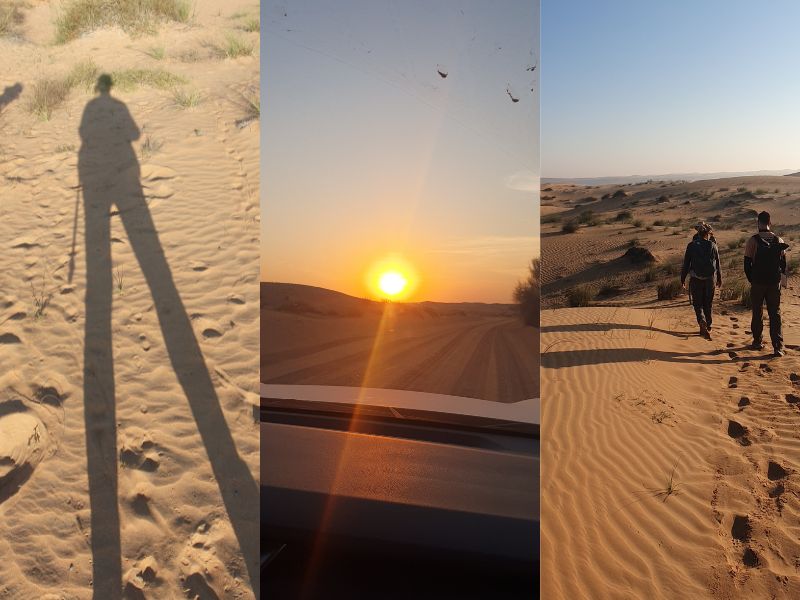
Our assignments take us out across the landscape to experience this stunning desert environment. There’s no spectacle quite like a glorious desert sunrise or the early morning mist snaking through the sand dunes like a silk scarf, before it burns off for the day.
This trip is in January, and daytime temperatutres are very pleasant. You do need to be prepared to walk a few kilometres and scale a substantial sand dune or two to reach your observation point. It’s also cold at night in the desert, so be prepared.
Our Dubai Desert Conservation participants

My companions, on this expedition were from the UK, Germany and Italy and a nicer bunch of people I have yet to meet. I loved my desert experience and felt priveleged to see this kind of wildlife conservation in action. A highlight for me was spotting a beautiful Arabian fox trotting along a sandy track in the far south of the reserve. She was so elegant with her long slim legs, bushy tail and large ears. Like a stretched version of our own common red fox in the UK.
Environmental Conservation in action
I asked Malika, our Biosphere expedition leader, about the project. “It’s really important that we support the efficient management of the reserve and the animals seem to be thriving. The citizen science element of the expedition is crucial, because there are two scientists working in an area of about 225 square kilometres and there is a lot of wildlife out there. Doing a yearly inventory is an impossible thing for them to do; they need more eyes and ears out in the field to count animals and record data. We set the activities and the field science that we want teams to help us with – in a way that it’s like collecting stamps. You don’t have to be a biologist to collect meaningful data that helps with reserve management.”
Chris, one of my fellow citizen scientists adds “When you’re travelling it’s very easy to see lots of sights but it’s very rare that you actually get to contribute to the places that you are visiting, and with Biosphere Expeditions you actually get to be a part of a scientific expedition collecting real data that helps to protect the ecosystem that you’re spending time in. What looked like just desert when you’re flying into Dubai airport comes to life and you get a very different perspective on things. You get to roll up your sleeves and make a difference.”
From sand dunes to skyscrapers
I take my leave of the desert and its delightful wildlife, with reluctance. I head for the vibrant metropolis of rapidly expanding Dubai city, so close to this precious re-wilded place.
In just one hour I arrive in another world. High-rise buildings are growing like a forest with the unfettered energy of this extraordinary city. Dubai’s expansion is a testament to human ingenuity and ambition. Skyscrapers pierce the sky, luxury hotels redefine opulence – and city lights create a dazzling spectacle. Dubai is a story still being written at an incredible pace. Let’s hope the desert and its wildlife remain as a key chapter in that story.
Biosphere Expeditions specialise in wildlife conservation volunteer holidays in areas around the world where animals are threatened by loss of habitat or other issues caused by us. They have projects all over the world including Thailand, the Azores, Malawi, Kyrgyzstan, Sweden, South Africa and the Maldives. If you would like to join a Biosphere Expedition check out their upcoming expeditions.
Thanks to Ralf Buerglin, one of our participants for the additional professional photos
I alaso attended the Wolf expedition in Germany – read about my experience Biosphere Wolf Expedition In Germany